Americans eat a staggering volume of avocados every year—more than 3 billion tons, with over 80% coming from a single Mexican state. For years, that appetite carried a hidden cost: cleared forests, strained watersheds, and communities caught in the crossfire. On International Avocado Day, there's a genuinely different story to tell.
According to Climate Rights International, a novel certification program has transformed the fate of Mexico's forests in just two years—and it now covers more than 90% of Mexican avocados exported to the United States. For procurement directors, grocery buyers, and foodservice executives, that's not an environmental footnote. It's a shift in what "responsibly sourced" can actually mean at scale.
How the Pro-Forest Agriculture Program Works
Established in 2024 by the Mexican environmental organization Guardián Forestal in partnership with the government of the state of Michoacán, the Pro-Forest Agriculture (PFA) program is built on technology rather than paperwork promises.
It combines three tools to keep deforestation out of the supply chain:
- Satellite imagery to track land use over time
- Artificial intelligence to flag changes at scale
- Geospatial analysis to tie orchards to specific parcels
Companies earn and keep voluntary PFA certification by using Guardián Forestal's monitoring system to exclude any orchard deforested since 2018, or any orchard with unresolved environmental fines or administrative orders. Today that system covers more than 53,000 orchards spanning over 200,000 hectares across all six Mexican states with significant avocado production.
The participation numbers are what make it remarkable. Roughly 80 packinghouses, guacamole processors, and avocado oil producers—representing more than 90% of Mexican avocado exports to the U.S.—are in the voluntary system.
"The Mexican avocado industry was until recently associated with rampant deforestation," said Daniel Wilkinson, senior policy advisor at Climate Rights International. "Now, avocado buyers have a practical tool to screen orchards and make sourcing decisions based on rigorous, science-based monitoring—and they're using it. The result has been one of the most rapid transformations of an agricultural supply chain we've seen in recent years."
From "Unholy Guacamole" to a Working Model
The context matters. Climate Rights International's December 2023 report, Unholy Guacamole, documented how avocado production for the U.S. market fueled widespread deforestation and contributed to water scarcity and violence affecting local communities.
A 2024 report went further, naming four leading U.S. sellers—Calavo Growers, Fresh Del Monte Produce, Mission Produce, and West Pak Avocado—as sourcing from orchards on recently deforested land despite their own corporate sustainability commitments. All four now participate in the PFA program, as do most other companies exporting Mexican avocados to the U.S.
Retailers Are Driving Adoption
The fastest lever for change hasn't been regulation—it's been purchasing power. Retailers reshaped the market simply by changing how they buy.
- In 2025, Costco Wholesale Corporation committed to reduce deforestation in its avocado supply chain and to encourage suppliers to join the PFA program.
- In May 2026, Sprouts Farmers Market, Inc., headquartered in Phoenix, Arizona, announced that all avocados it sources from Mexico must come from PFA-certified suppliers.
Many other retailers have not publicly disclosed their sourcing policies, but demand for PFA certification has expanded rapidly across the industry.
"Retailers have shown they can play a powerful role in protecting forests simply by changing how they buy avocados," said Heriberto Padilla, director of Guardián Forestal. "As more retailers adopt certified sourcing, the market for avocados linked to recent deforestation will continue to shrink."
The Gap That Remains
Certification is not yet universal. Producers linked to recent deforestation can still reach U.S. shelves through companies that haven't adopted PFA-certified sourcing. In June, more than 50 environmental and food organizations urged additional U.S. supermarkets to source avocados only from PFA-certified packinghouses.
"What Guardián Forestal and the participating companies have accomplished in less than two years is remarkable," Wilkinson said. "But the work isn't finished. Until all major retailers require PFA-certified sourcing, producers linked to recent deforestation will continue to have access to part of the U.S. market."
Why It Matters
For grocery buyers, foodservice procurement teams, and institutional purchasers, PFA offers something the sustainability conversation has often lacked: a verifiable, science-based standard tied to actual satellite data—not a vague pledge. That has three practical implications.
- Sourcing risk is now screenable. With a system covering 90%+ of Mexican avocado exports, buyers can specify PFA-certified suppliers and back their sustainability claims with monitoring rather than marketing language.
- Consumer and stakeholder scrutiny is rising. With Costco and Sprouts already public on the issue and dozens of organizations pressing more retailers, "deforestation-free" is moving from differentiator toward baseline expectation.
- It's a template beyond avocados. A satellite-plus-AI model that reshaped a commodity supply chain in two years is a signal for how coffee, cocoa, palm, and beef sourcing could be verified next.
The actionable takeaway: if avocados are on your menu, your shelves, or your spec sheet, now is the moment to ask suppliers whether their Mexican product is PFA-certified—and to write that requirement into contracts before your competitors and customers do it for you.
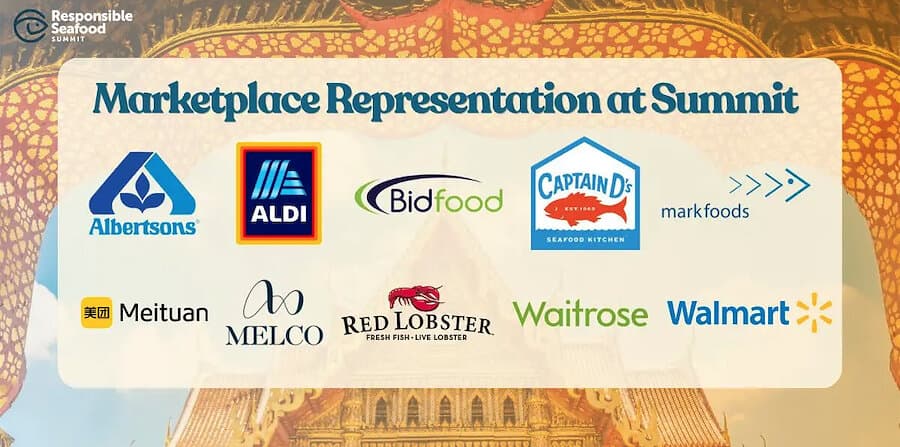
Is deforestation-free sourcing about to become table stakes across the produce aisle? Explore our latest coverage of responsible sourcing at the Responsible Seafood Summit 2026 and our look at Lonohana becoming Hawaii's largest cacao grower—then tell us in the comments how your team is handling certified sourcing.
Written by Michael Politz, Author of Guide to Restaurant Success: The Proven Process for Starting Any Restaurant Business From Scratch to Success (ISBN: 978-1-119-66896-1), Founder of Food & Beverage Magazine, the leading online magazine and resource in the industry. Designer of the Bluetooth logo and recognized in Entrepreneur Magazine’s “Top 40 Under 40” for founding American Wholesale Floral. Politz is also the founder of the Proof Awards and the CPG Awards and a partner in numerous consumer brands across the food and beverage sector.