By Ashley Lam, Vice President of Marketing, Natalie’s / Perricone Farms
As we watch as beverage programs continue to evolve, operators and bartenders are redefining what it means to pour something special. In 2026, drinks will increasingly blur the line between culinary craft and beverage service, with premium juices playing a starring role. Below are five trends poised to shape menus next year. You’ll notice each one is an opportunity for operators to elevate flavor, occasion, and guest hospitality.
Holiday Pop-Up Bars Go Culinary
Seasonal activations are moving beyond being gimmicky. Instead of novelty cocktails alone, restauranteurs and beverage directors are building chef-driven pop-ups that showcase limited-run mocktails and warm, health-forward creations. Think spiced apple cider finished with a whisper of star anise, or a hot carrot-ginger toddy that goes down like a light soup in a glass. These cozy, Instagram-ready activations give culinary teams a stage to present premium juices as core ingredients, not just afterthoughts. It also allows mixologists an opportunity to test menu concepts in a live customer environment.
Sober Takeovers Feel Celebratory
It’s not a passing fad. We’re seeing the sober-curious movement continuing to mature and grow in popularity. Rather than a subtraction, alcohol-free nights are being programmed as thoughtful additions: sensory, layered, and celebratory. Minimal-ingredient, single-fruit juices bring depth and nuance to mocktails in ways simple syrups and bitters cannot. Juices like tangerine, pineapple-kale blends, and beet-forward mixes add texture, brightness, and palate complexity. For operators, a well-curated nonalcoholic lineup expands guest inclusivity and opens new revenue streams without diluting existing culinary standards.
Snackable Sips Create Tasting Moments
Menus are borrowing from the wine world with “snackable sips”: small-format juice flights paired with bite-sized accompaniments. Four-ounce pours of orange, pineapple-kale, or carrot-ginger allow guests to taste finishing-grade juices the way they would a flight of wines or beer. Then, to understand how a juice can elevate a dish, these flights are finished with an edible fruit or vegetable garnish. These pairings are especially effective at brunch and daytime programming, enticing guests to explore and trade up their beverage experience.
Floral Wine Mimosas — Elevated Brunch Staples
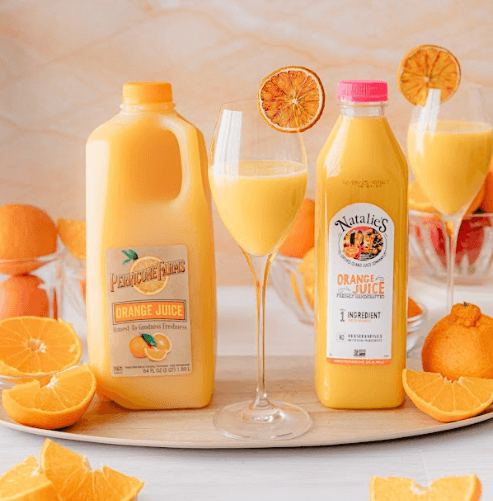
It’s exciting to see mimosas evolve beyond orange juice and prosecco. Floral wines, those with elderflower, hibiscus, or jasmine notes, can be paired with premium orange, tangerine or pineapple juice to create an elevated, brunch-worthy pour. These combinations add aromatic complexity and visual appeal, and they lend themselves to seasonal variations that keep brunch menus fresh and newsworthy.
Loaded Waters & Functional Mixers Rise
Hydration will be getting the gourmet treatment. “Loaded waters” and mocktails enhanced with fruit, electrolytes, or prebiotics are moving from niche wellness bars into mainstream menu programming. Clean, nutrient-dense juices function as natural mixers, contributing vitamin C, antioxidants, and real fruit flavor without relying on the artificial additives consumers have grown wary of. For operators focused on attracting wellness-forward guests, these mixers provide both functional benefits and culinary legitimacy.
Taken together, these trends signal a broader shift: beverages are no longer ancillary to food; they are an extension of your kitchen’s craft. For operators who embrace thoughtful sourcing and culinary technique, premium juices offer a versatile tool to elevate menus, expand guest experiences, and stay ahead in a rapidly evolving marketplace.
Ashley Lam is a fresh craft-juice leader and VP of Marketing at Natalie’s / Perricone Farms.