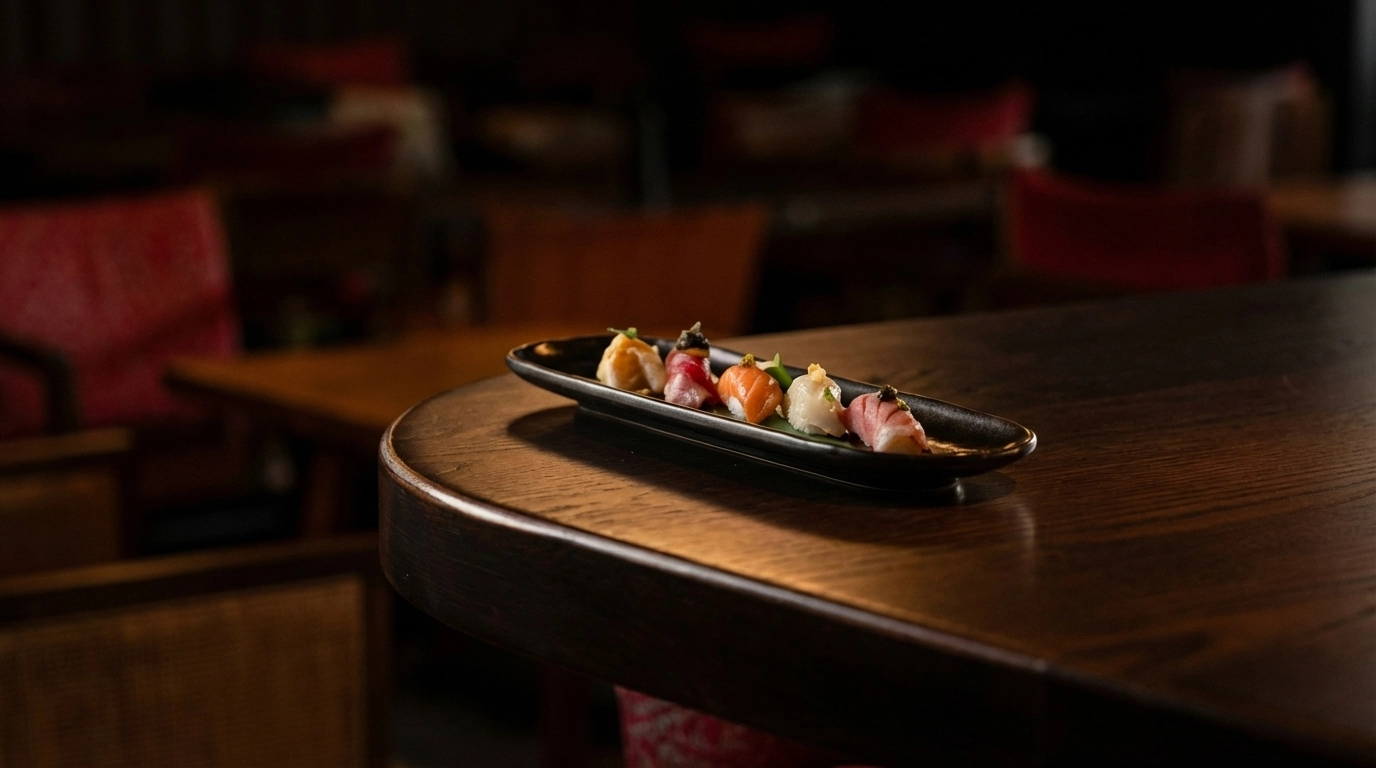
The Swiss Alps just got a serious culinary upgrade. Six Senses Crans-Montana is shaking things up this winter with two completely reimagined dining experiences that are already turning heads in the hospitality industry. We’re talking about a full transformation that goes way beyond your typical hotel restaurant refresh.
Byakko: Where Japanese Tradition Meets Alpine Innovation
The resort’s signature Japanese restaurant, Byakko, has emerged from an extensive redesign looking nothing like its former self. This isn’t just a new coat of paint: we’re seeing a complete philosophical shift toward what Executive Chef Yukta Ghale calls “authentic refinement.”
.jpg)
The menu reads like a love letter to Japanese culinary tradition, but with some serious contemporary flair. Think delicate sashimi that practically melts on your tongue, slow-simmered broths that take hours to perfect, and charcoal-grilled specialties that showcase real artisanal skill. What makes this particularly interesting for food and beverage professionals is how they’re sourcing: everything is seasonal, everything is intentional.
The design philosophy here is pure minimalism done right. Natural materials, thoughtful lighting, and that sense of calm that only comes when every detail has been considered. It’s the kind of space that makes you slow down, which is exactly what Japanese dining culture is all about.
.jpg)
Ora Bar & Lounge: The New Social Hub
If Byakko is about contemplation, Ora Bar & Lounge is all about energy. Launching in early December 2025, this space is designed to be the resort’s beating heart: a place where après-ski culture meets elevated mixology.
The beverage program is where things get really interesting from an industry perspective. They’re committing to sourcing ingredients from within 100 miles of the resort, which isn’t just good marketing: it’s a genuine challenge that’s pushing their team to get creative. Local cognac, regional spirits, mountain herbs, and seasonal fruit are all finding their way into cocktails that actually taste like the place they’re made.
.jpg)
The space itself combines warmth with those incredible Alpine views that make Switzerland such a draw. But it’s not just about the scenery: they’ve thought through the acoustic design, the flow of service, and how to create intimate spaces within a larger social environment. There’s even a dedicated cigar and cognac lounge for guests who want that extra touch of sophistication.
Chef Yukta Ghale: The Vision Behind the Transformation
What’s driving all this change? New Executive Chef Yukta Ghale brings an ingredient-first philosophy that’s reshaping how both venues approach their menus. Rather than forcing concepts onto ingredients, Ghale is letting the local Swiss produce and traditional Japanese techniques speak for themselves.
This approach is particularly smart in today’s market, where diners: especially at this level: are looking for authenticity over Instagram moments. Don’t get me wrong, the food looks incredible, but it’s clear the priority is flavor and technique first.
.jpg)
The Six Senses Approach to Hospitality Innovation
General Manager Jean-Yves Blatt puts it perfectly: “Culinary excellence is at the heart of our vision.” But what does that actually mean in practice? It’s about creating experiences that feel both lively and sophisticated: not an easy balance to strike.
The resort already proved this concept works with Wild Cabin, their shared-dining concept that launched in early summer 2025 and quickly became a guest favorite. Now they’re scaling that success across multiple venues, each with its own distinct personality but all sharing the same commitment to quality and authenticity.
.jpg)
What This Means for the Industry
For food and beverage professionals, there are some key takeaways here. First, the commitment to local sourcing isn’t just trend-following: it’s becoming table stakes for luxury hospitality. Guests expect it, and frankly, it often results in better food.
Second, the multi-venue approach Six Senses is taking allows them to serve different needs throughout the day and across different guest preferences. Byakko for intimate, contemplative dining. Ora Bar for social energy. Wild Cabin for casual sharing. Each space has a clear identity and purpose.
The integration of entertainment: DJ programming, live performances, curated playlists: shows how the line between dining and entertainment continues to blur. Modern hospitality isn’t just about the food; it’s about creating a complete sensory experience.
This kind of comprehensive dining ecosystem is particularly relevant for menu innovation strategies that many in our industry are exploring. The key is ensuring each concept feels authentic to the overall brand while serving a distinct purpose.
The Bigger Picture
Six Senses Crans-Montana sits in one of the world’s most competitive luxury hospitality markets. The fact that they’re investing heavily in dining experiences: rather than just relying on their location and amenities: shows how crucial food and beverage has become to the overall guest experience.
The resort features 78 rooms, suites, and residences, which means their F&B operations need to serve both hotel guests and local clientele to be truly successful. This dual-market approach requires a different level of culinary sophistication than many hotel restaurants attempt.
.jpg)
Looking Forward
As we head into 2025, the hospitality industry continues to evolve rapidly. What Six Senses is doing in Switzerland represents a broader trend toward authentic, experience-driven dining that goes beyond just serving good food.
For hospitality professionals, the lesson is clear: guests at every level are becoming more sophisticated in their expectations. They want authenticity, they want local connection, and they want experiences that feel purposeful rather than generic.
The success of these reimagined dining experiences will likely influence how other luxury resorts approach their food and beverage strategies. We’ll be watching closely to see how this plays out in the competitive Alpine hospitality market.
Want to stay updated on the latest trends in luxury hospitality dining? Follow Food & Beverage Magazine for industry insights and exclusive coverage of innovative culinary concepts that are shaping the future of our industry.
Written by Michael Politz, Author of Guide to Restaurant Success: The Proven Process for Starting Any Restaurant Business From Scratch to Success (ISBN: 978-1-119-66896-1), Founder of Food & Beverage Magazine, the leading online magazine and resource in the industry. Designer of the Bluetooth logo and recognized in Entrepreneur Magazine’s “Top 40 Under 40” for founding American Wholesale Floral. Politz is also the founder of the Proof Awards and the CPG Awards and a partner in numerous consumer brands across the food and beverage sector.



