The foodservice industry’s future is being shaped by some of its brightest minds: and they’ve just been named to the 2026 Women’s Foodservice Forum Board of Directors.
This isn’t just another leadership roster. It’s a strategic assembly of executives from operators, manufacturers, distributors, and allied partners who understand what it takes to build stronger teams, develop future leaders, and drive performance in an industry that never stops moving.
Leadership That Understands the Industry’s Challenges
The Women’s Foodservice Forum (WFF) has been in the business of developing leaders since 1989. As the premier nonprofit professional development organization serving the foodservice industry, WFF has a singular focus: Changing the Face of Leadership®. That mission takes on new urgency in 2026, as the industry grapples with talent shortages, evolving consumer expectations, and the need for more diverse leadership pipelines.
“Impact starts at the top with leaders who understand our industry, are committed to its growth, and are ready to foster work environments that create greater opportunities for everyone while driving stronger organizational performance,” said Kelli Valade, WFF President & CEO.
Valade knows what she’s talking about. She assumed leadership of WFF in February 2026, bringing extensive executive experience from roles as CEO of Denny’s Corp., CEO of Red Lobster, and president of Chili’s Bar & Grill. She’s not just leading WFF: she’s living proof of what the organization makes possible.

Dawn Rasmussen Takes the Chair
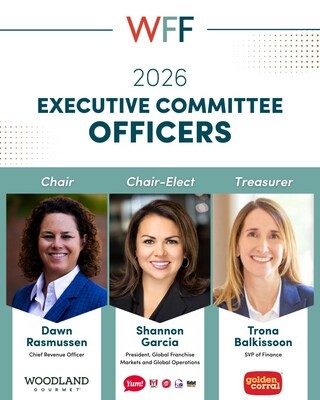
Leading the 2026 Board as Chair is Dawn Rasmussen, Chief Revenue Officer at Woodland Gourmet. Her appointment signals WFF’s continued commitment to elevating voices across the foodservice spectrum: not just from restaurant operators, but from manufacturers and distributors who play equally critical roles in the industry’s success.
“The WFF Board is made up of women and men with deep industry expertise and a shared commitment to helping others grow their careers while strengthening the industry,” Rasmussen said. “Through its in-person and virtual leadership development, role modeling, and strategic networking, WFF is building a strong and diverse pipeline of future leaders.”
Rasmussen’s leadership comes at a pivotal time. According to WFF’s own research, organizations with diverse leadership teams see measurable improvements in business performance, innovation, and employee retention: outcomes that every foodservice company is chasing right now.
Executive Committee: A Cross-Section of Industry Excellence
The 2026 Executive Committee reads like a who’s who of foodservice leadership:
Chair-Elect: Shannon Garcia, President of Global Franchise Markets and Global Operations at Yum! Brands, brings global perspective and operational expertise from one of the world’s largest restaurant companies.
Treasurer: Trona Balkissoon, SVP of Finance at Golden Corral, oversees financial strategy for a brand that serves millions of guests annually.
Immediate Past Chair: Kate Jaspon, SVP and Chief Financial Officer at Inspire Brands, provides continuity and institutional knowledge from her leadership of one of the industry’s largest multi-brand restaurant companies.
Additional Executive Committee members include:
- Tanika Cabral, GM and VP of Franchise Leadership at The Coca-Cola Company
- Elizabeth Horvath, VP Marketing NA at Kerry
- Meredith Nelson, Business Unit Director for Mexican Meals at General Mills
- Coley O’Brien, Chief People Officer at The Wendy’s Company

Board Leadership Across the Industry Spectrum
The full Board of Directors represents a strategic mix of perspectives:
Brooke Buchanan, Chief Corporate Affairs Officer at Panera Bread, brings expertise in brand positioning and corporate strategy from one of the industry’s fast-casual leaders.
Christie Cook, Vice President and Head of Human Resources at DINE Brands Global (parent company of Applebee’s and IHOP), focuses on the talent strategies that will determine which companies win in the years ahead.
Sandy Furbee, Senior Director of Product Development & Commercialization at Nestlé Professional, connects foodservice operators with innovation from one of the world’s largest food manufacturers.
Janicka Green, Divisional Vice President of Operations at LongHorn Steakhouse (Darden Restaurants), manages multi-unit operations for one of the industry’s most successful casual dining concepts.
Jeff Swinton, VP of Go-To-Market at CJ Schwan’s Company, represents the distribution and manufacturing expertise that keeps kitchens running.
Andra Stan, Vice President of Go-to-Market for North America at McCain Foods, brings global food manufacturing perspective to the board.
Elizabeth Ubell, SVP and Chief Strategy Officer at Sysco Foods, oversees strategy for the world’s largest foodservice distributor, connecting manufacturers with operators at scale.
Why This Board Composition Matters
The diversity of experience on this board isn’t accidental. WFF deliberately brings together leaders from different segments because the challenges facing the industry: talent development, operational efficiency, supply chain resilience, and changing consumer preferences: require collaboration across the entire ecosystem.
A restaurant operator developing future managers needs insights from HR leaders at multi-brand companies. A manufacturer launching new products benefits from understanding operator pain points. A distributor optimizing delivery routes gains from hearing about the technology investments operators are making.
This cross-pollination of ideas and experiences is what makes WFF’s leadership development programs so effective. It’s not just theory: it’s practical wisdom from people solving the same problems you are.
The Mission Behind the Appointments
WFF’s work goes beyond individual career development. The organization partners with foodservice companies to create work environments where everyone can thrive: and where organizations reap the financial and performance rewards of a diverse workforce.
The research backs this up. Companies that invest in leadership development see:
- Higher employee engagement and retention
- Improved operational performance
- Better customer satisfaction scores
- Stronger financial results
For an industry struggling with turnover rates that sometimes exceed 100% annually, these outcomes aren’t nice-to-haves. They’re business imperatives.
Building Tomorrow’s Leaders Today
The 2026 board will guide WFF’s strategic priorities as the organization continues expanding its reach through both in-person and virtual leadership development programs. This hybrid approach became essential during the pandemic and has proven valuable for reaching professionals who can’t always travel to conferences but still need access to top-tier development opportunities.
WFF’s programs focus on competencies that matter in today’s foodservice environment: strategic thinking, change management, financial acumen, and the ability to build and lead diverse teams. These aren’t soft skills: they’re the hard skills that separate good managers from great leaders.
The organization also provides role modeling and strategic networking opportunities that help emerging leaders see what’s possible. When you can interact with someone who’s walked the path you’re on, who understands the specific challenges of foodservice leadership, the learning accelerates.
What This Means for the Industry
As these leaders begin their work guiding WFF’s strategy, the impact will ripple across the foodservice industry. Every person they help develop becomes a stronger leader in their organization. Every best practice they share helps companies perform better. Every connection they facilitate creates new opportunities for collaboration.
For restaurant operators struggling to build strong management teams, WFF’s work matters. For manufacturers trying to understand operator needs, this board’s insights matter. For distributors navigating a complex landscape, the connections WFF facilitates matter.
The foodservice industry is in the people business: whether those people are guests enjoying a meal or team members building careers. The 2026 WFF Board understands this deeply. Their leadership will help ensure the industry has the talent it needs to thrive in an increasingly competitive environment.
Want to stay updated on foodservice industry leadership and trends? Subscribe to Food & Beverage Magazine for the latest news and insights. Whether you’re a restaurant owner, procurement director, or hospitality executive, we’ve got the industry intelligence you need.
Looking to showcase your company’s leadership development initiatives? Contact us to learn about advertising opportunities that reach decision-makers across the food and beverage industry.
Written by Michael Politz, Author of Guide to Restaurant Success: The Proven Process for Starting Any Restaurant Business From Scratch to Success (ISBN: 978-1-119-66896-1), Founder of Food & Beverage Magazine, the leading online magazine and resource in the industry. Designer of the Bluetooth logo and recognized in Entrepreneur Magazine’s “Top 40 Under 40” for founding American Wholesale Floral. Politz is also the founder of the Proof Awards and the CPG Awards and a partner in numerous consumer brands across the food and beverage sector.