

If you've noticed your morning coffee costing more: whether at your favorite café or in the grocery store: you're not imagining things. Coffee prices have reached historic highs in 2025, and the food and beverage industry is feeling the impact across the entire supply chain. To understand what's driving these increases and what hospitality professionals can expect in 2026, we spoke with Heather Perry, CEO of Klatch Coffee, two-time US Barista Champion, and former President of the Specialty Coffee Association.
The Perfect Storm: Record High Green Coffee Prices
In early February 2025, green coffee prices (unroasted coffee beans) surged to unprecedented levels, creating what Perry describes as a "perfect storm" of factors. While prices have retracted slightly from those record highs, they remain at historically elevated levels: and that's before factoring in new tariffs on imported goods.
"Green coffee must be sourced, imported, roasted, and packaged before it can be sold or used in a café setting," Perry explains. "These factors affect almost everyone up and down the coffee supply chain."
For food and beverage managers and hospitality leaders, this means understanding that price increases aren't just a short-term blip: they're the result of complex, interconnected global factors that will continue impacting operations well into 2026.
What's Driving Coffee Prices Higher?
Weather Impacts on Global Production
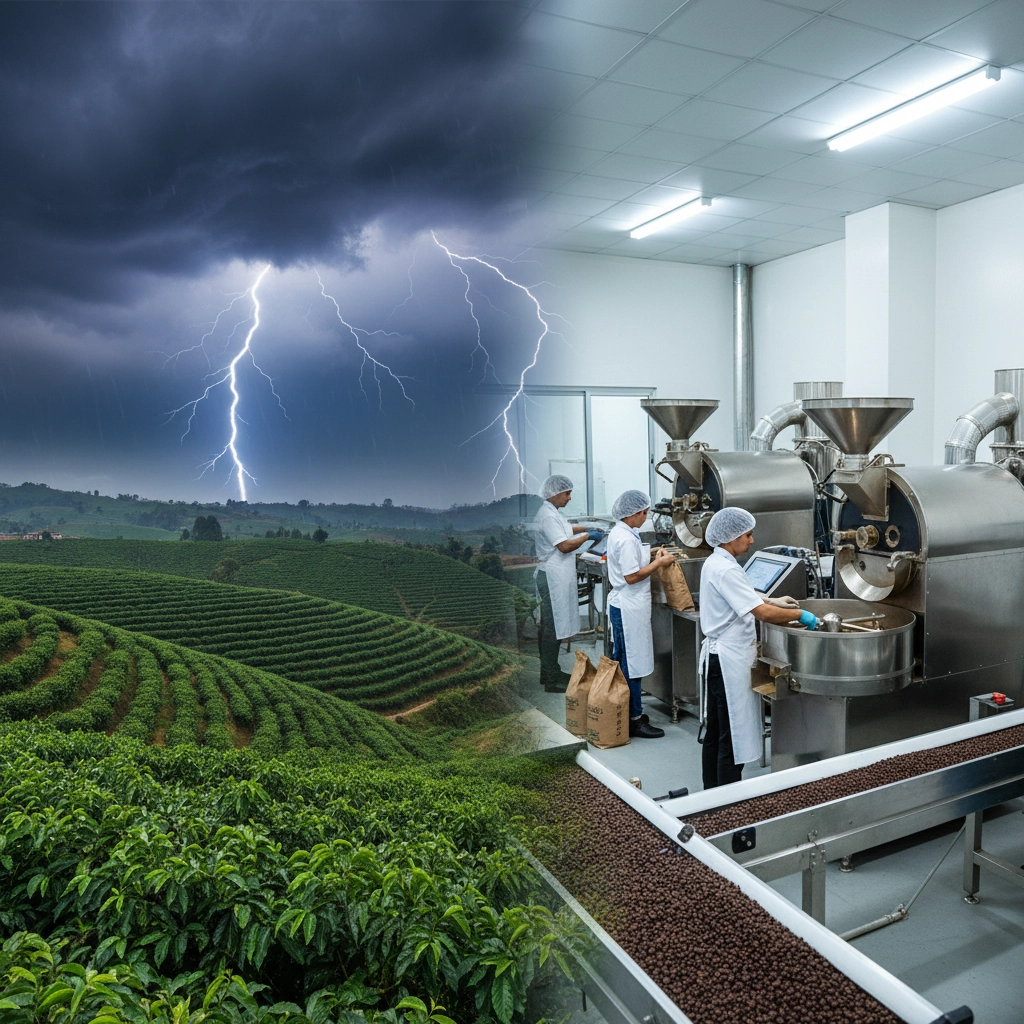
Brazil, the world's largest producer of Arabica beans, has experienced significant weather-related challenges affecting coffee harvests. Arabica production declined in 2025, partially due to drought, frost, freezing temperatures, and flooding. Vietnam, the world's largest Robusta producer, has faced similar weather disruptions.
"When the world's two largest coffee producers face harvest challenges simultaneously, the global supply tightens dramatically," Perry notes. These weather patterns aren't isolated incidents: they're part of longer-term climate trends affecting agricultural regions worldwide.
Increased Global Demand
While US coffee consumption remains relatively stable, rapidly expanding markets like China are creating unprecedented global demand. American importers and roasters now compete in a much more crowded marketplace for finite coffee supplies.
"We're seeing countries that traditionally weren't major coffee consumers developing sophisticated coffee cultures," Perry explains. "This increased competition for the same supply naturally drives prices higher."
Strategic Supply Management
As prices began trending upward in early 2025, some coffee producers held back their supply, hoping to capitalize on even higher prices. This strategic withholding created additional shortages, leading to bidding wars among buyers and further price escalation.
New Tariff Impacts
Perhaps most significantly for US food and beverage operations, new tariffs implemented in 2025 have dramatically affected coffee costs. A 50% tariff on Brazilian coffee remains in place as of this writing: critical because Brazilian beans are components in countless coffee blends served across American restaurants and cafés.
Additional tariffs on coffee from Vietnam and Indonesia have compounded the problem. Even brief tariff announcements, like the temporary proposal affecting Colombian coffee, created market panic and price spikes.
Why Nearly 100% of Coffee is Imported
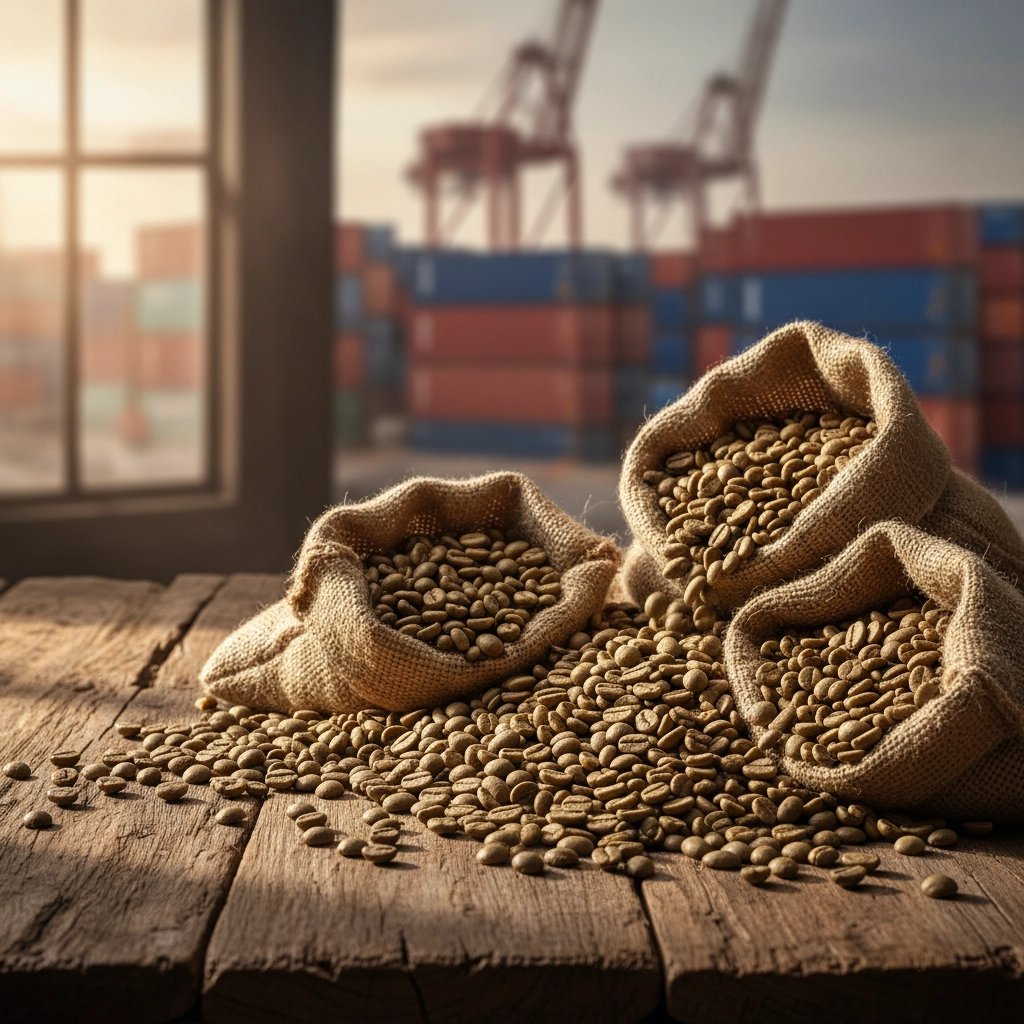
Understanding the coffee supply chain is crucial for food and beverage professionals navigating these price increases. Nearly all coffee consumed in the United States is imported from coffee-producing regions outside the country.
"While Hawaii produces some excellent coffee, it's impossible to meet total US demand using domestic beans," Perry explains. "Roasters and importers regularly travel to establish direct relationships with producers in countries like El Salvador, Brazil, and Panama."
This import dependency makes the US coffee market particularly vulnerable to international trade policies and global supply disruptions: a reality that food service industry leaders must factor into their procurement and pricing strategies.
How Industry Players are Coping
Strategic Contracting and Planning
Larger buyers with more leverage can secure future contracts to lock in prices, providing some stability. However, these contracts have limits, and buyers eventually must replenish stock at current market prices.
"Planning for the future is critical, but no one can secure an infinite supply at locked-in prices," Perry notes.
Inventory Management
Many roasters and importers are drawing down existing inventory while deferring new purchases until prices stabilize. This strategy provides temporary relief but isn't sustainable long-term.
Absorbing Cost Increases
High-quality specialty coffee roasters often absorb price increases temporarily rather than immediately passing them to customers. Alternative strategies include reducing package sizes, though specialty roasters resist substituting lower-quality beans.
"At Klatch Coffee, we've introduced price increases less frequently, doing our best to hold the line rather than showing increases to consumers monthly or weekly," Perry explains. "Our goal is to delay increases as long as possible while delivering a great experience."
Strategic Price Adjustments
When absorption becomes unsustainable, businesses must pass increases to customers. Many roasters and cafés have implemented several incremental increases over the past four years and may need additional adjustments to maintain viability.
The 2026 Market Outlook
Coffee price impacts on consumers typically lag behind commodity market changes by 3-6 months due to harvesting, processing, shipping, roasting, and distribution timelines. This means hospitality professionals should prepare for continued pressure through early 2026.
"Higher prices incentivize producers to increase output by planting more coffee, allocating additional land, or investing in equipment," Perry explains. "But these are longer-term changes that take time to impact the market."
Additional factors affecting consumer prices include increased costs for packaging materials, shipping, and labor: green coffee prices are just one component of total cost structure.
However, there are reasons for cautious optimism. In the 30 days following record highs, coffee prices pulled back slightly, though they remain historically elevated. Perry and industry observers hope prices will stabilize in 2026, with tariff policy being a key variable.
Tariff Relief Possibilities
The National Coffee Association advocates for coffee exemptions from new tariffs, and there's industry optimism for relief. Since the US produces virtually no coffee domestically, there's minimal domestic industry to protect through tariff policy.
"We're optimistic that tariff relief in the specialty coffee industry is coming soon," Perry says. "When almost all coffee must be imported to meet US demand, tariffs primarily hurt American businesses and consumers."
Maintaining Value Despite Higher Costs
Despite price pressures, Perry emphasizes that specialty coffee remains exceptional value. "After several years of absorbing increases, we've raised prices on some products during 2025. The net increase? About $0.10 per cup of brewed coffee."
For hospitality leaders, this perspective is crucial for customer communication. While inflation concerns are valid, moderate price adjustments shouldn't prevent customers from enjoying quality coffee experiences.
Food and beverage managers can focus on menu design strategies, exploring value-oriented options while maintaining premium offerings. Home brewing equipment and education can also provide customers with cost-effective alternatives.
Key Takeaways for Food & Beverage Professionals
- Plan for continued elevated prices through 2026, with potential stabilization later in the year
- Evaluate supplier contracts and inventory strategies to manage cash flow and maintain quality
- Consider gradual, strategic price adjustments rather than dramatic increases that shock customers
- Communicate value proposition clearly to help customers understand quality and experience benefits
- Monitor tariff developments that could provide cost relief
- Explore menu innovation to maintain margins while offering customer value
The coffee industry's current challenges reflect broader supply chain complexities affecting the entire food and beverage sector. By understanding these dynamics and implementing strategic responses, hospitality professionals can navigate this period while maintaining customer satisfaction and business viability.
As Perry concludes: "It's worth noting that although newsworthy, recent price increases are still small when viewing the big picture. While inflation is justifiably on everyone's mind, these increases shouldn't stop anyone from enjoying their favorite cup!"
For more insights on managing supply chain challenges in the hospitality industry, explore our coverage of industry trends and cost management strategies.
Written by Michael Politz, Author of Guide to Restaurant Success: The Proven Process for Starting Any Restaurant Business From Scratch to Success (ISBN: 978-1-119-66896-1), Founder of Food & Beverage Magazine, the leading online magazine and resource in the industry. Designer of the Bluetooth logo and recognized in Entrepreneur Magazine's "Top 40 Under 40" for founding American Wholesale Floral. Politz is also the founder of the Proof Awards and the CPG Awards and a partner in numerous consumer brands across the food and beverage sector.