The food and beverage industry continues to evolve with innovative concepts that blend culinary traditions, and Charmant represents a perfect example of this trend. On Saturday, November 22, 2025, husband-and-wife culinary veterans Chris and Bonnie Borges unveiled their latest venture in Mid-City New Orleans, bringing European bistro elegance to the heart of the Crescent City’s vibrant dining scene.
Located at 514 City Park Avenue in the former MoPho space, Charmant showcases how experienced hospitality professionals can create something entirely fresh while honoring both European culinary traditions and New Orleans’ legendary food culture. For restaurant owners and foodservice executives looking to understand successful concept development, Charmant offers valuable insights into menu innovation, beverage program curation, and creating authentic neighborhood dining experiences.
The Vision Behind Charmant: Building Community Through Hospitality
“Our goal was to build the kind of place we’d want in our own neighborhood, where you can stop in for brunch, a glass of wine after work, or linger over dinner with friends,” explains Executive Chef Chris Borges. This philosophy reflects a growing trend in the food and beverage industry toward community-focused establishments that serve multiple dayparts effectively.
The restaurant’s name, meaning “lovely” or “captivating” in French, hints at both celebration and connection while nodding to the Charmat sparkling-wine process: a fitting connection to Bonnie Borges’ thoughtfully curated wine program. This attention to concept storytelling demonstrates how successful food and beverage companies create meaningful brand narratives that resonate with both guests and industry professionals.
Chris Borges brings extensive culinary experience to the venture, while Bonnie Borges serves as General Manager and Sommelier, showcasing the power of complementary skill sets in restaurant management. Their approach exemplifies how food and beverage directors can successfully transition from working in established operations to creating their own concepts.
Day-to-Night Menu Innovation: European Technique Meets Local Ingredients
Charmant’s menu strategy addresses one of the most significant challenges in food service industry operations: creating compelling offerings across multiple dayparts. The restaurant operates with distinct daytime and evening service styles, each designed to capture different guest occasions and maximize revenue potential.
Brunch and Lunch Highlights
The daytime menu features refined, approachable cuisine that demonstrates menu innovation through unexpected combinations. Standout dishes include:
- Fried Brussels Sprouts Salad with lima beans, golden raisins, and cardamom yogurt: showcasing the trend toward elevated vegetable preparations
- Croque Madame layered with truffle salami, fontina, rapini, and soubise: a classic French dish with premium upgrades
- Yeasted Belgian Waffle with apples, lemon and ginger caramel: demonstrating how traditional techniques can create unique flavor profiles
- Wagyu Burger with cave-aged cheddar, horseradish beer mustard, caramelized onions, pickled zucchini and arugula on brioche: elevating the casual dining staple with premium ingredients

Evening Small Plates Program
The evening service shifts to a wine bar atmosphere with brasserie-style small plates, a format that’s proven successful for beverage-focused concepts. Menu highlights include:
- Roasted Beets with horseradish panna cotta, rye, dill pollen, and Wagyu beef tallow
- Scallop Crudo with apples, Tokyo turnips, and almond aillade
- Pork Osso Bucco Arancini with cherry pepper ragout
- Vermont Goat Crottin paired with duck confit and spiced pecans
- Artisanal cheese and charcuterie selections
This approach reflects current food and beverage trends toward shareable plates that encourage longer visits and higher per-guest beverage sales: a crucial consideration for food and beverage managers optimizing profitability.
Wine and Beverage Program: Accessibility Meets Expertise
Bonnie Borges’ sommelier background shines through Charmant’s beverage program, which balances accessibility with expertise: a critical balance for hospitality industry success. “Wine should invite conversation, not intimidation,” she explains. “My goal was to create a list that’s exciting but accessible with wines that are as fun and effortless as sitting around the table with friends.”
The wine program features:
- Carefully chosen small producers
- Grower Champagnes
- Distinctive varietals paired with Chef Borges’ menu
- By-the-glass options and flights
- Rotating reserves and tableside pours
Cocktail Innovation
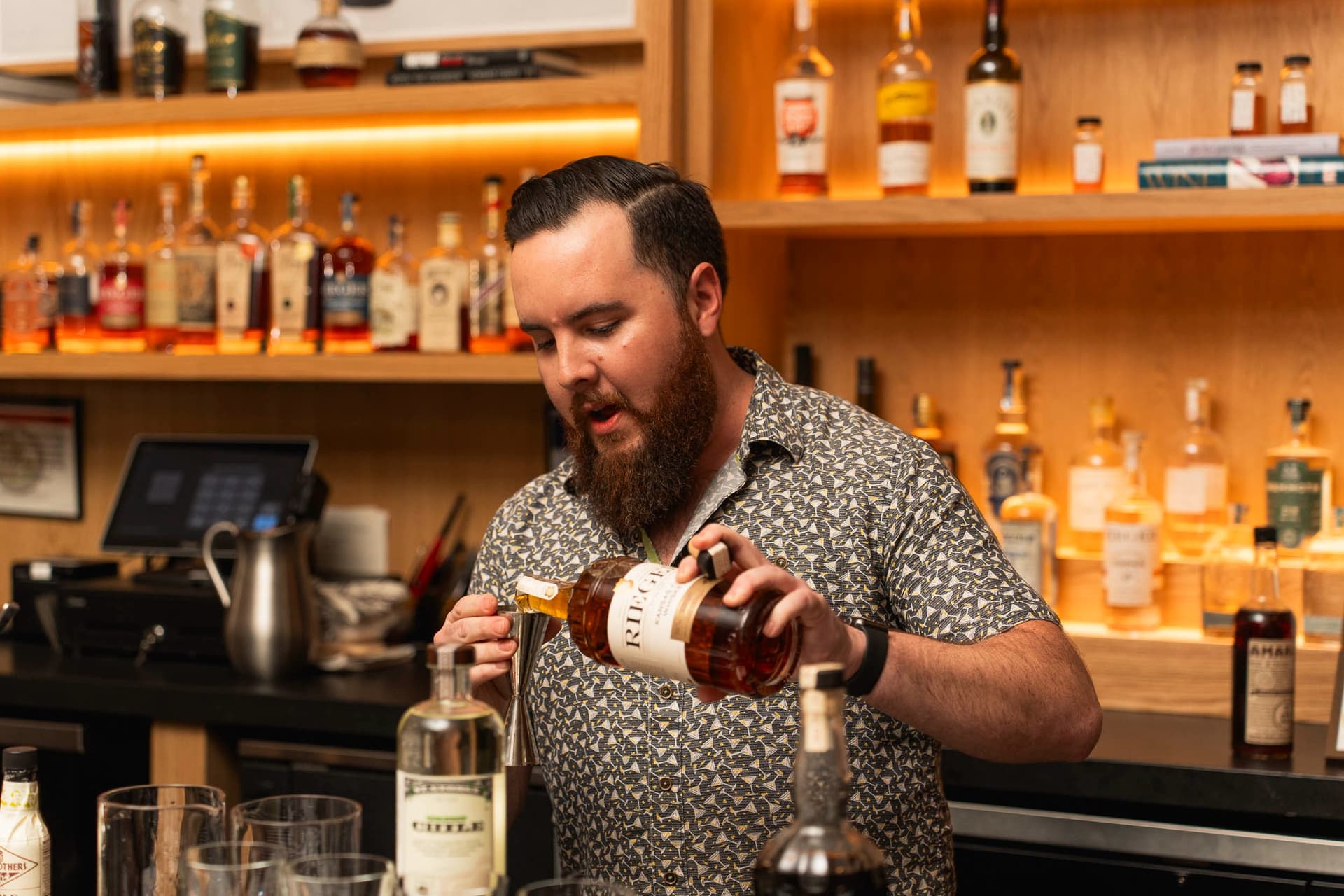
Lead Bartender Kyle Godwin, known for his work at The Country Club and Brutto Americano, developed a cocktail menu that complements the restaurant’s day-to-night concept. The program includes:
Breakfast Cocktails:
- Citrus & Silk (vodka, Amaretto, orange juice, and cream)
- The Breton Sound (blackberry and Earl Grey-infused gin, lemon, and mint)
Dinner Cocktails:
- Pear Pressure (spicy margarita variation with La Gritona reposado, spiced pear puree, lime, triple sec)
- Duck, Duck, Vermouth (duck fat-washed Bourbon, Campari and sweet vermouth)
This beverage strategy demonstrates how food and beverage services can create cohesive programs that support multiple service periods while maintaining profitability through premium ingredients and creative execution.
Design and Atmosphere: Creating Authentic European Ambiance
Bonnie Borges also designed Charmant’s 2,880-square-foot interior, blending Old World craftsmanship with modern sensibility. The space features:
- Blonde-wood floors with hand-laid tile inlays
- Copper accents throughout
- Serene palette of soft blues and crisp whites
- White-quartz bar as the room’s anchor
- Warm lighting and layered textures
- Outdoor patio for extended dining options
This design approach reflects growing food and beverage industry trends toward authentic, neighborhood-focused aesthetics rather than flashy, Instagram-driven concepts. The result creates an environment that supports both casual daytime visits and more intimate evening experiences.
Industry Implications: Lessons for Hospitality Leaders
Charmant’s opening offers several insights for food and beverage companies and hospitality managers:
Successful Partnership Dynamics
The Borges’ complementary skill sets: culinary expertise paired with sommelier knowledge and general management experience: demonstrate how successful food and beverage director partnerships can leverage individual strengths.
Multi-Daypart Strategy
The restaurant’s distinct day and evening concepts show how operators can maximize space utilization and revenue potential without confusing brand identity.
Beverage-Forward Profitability
With wine and cocktails as cornerstone elements rather than afterthoughts, Charmant exemplifies how beverage programs can drive profitability in competitive markets.
Local Market Understanding
By choosing Mid-City and creating a neighborhood-focused concept, the Borges demonstrate the importance of local market knowledge in site selection and concept development.
The Broader New Orleans Food Scene Context
Charmant’s opening contributes to New Orleans’ evolving dining landscape, where traditional Creole and Cajun establishments increasingly share space with innovative concepts that honor local culture while introducing new influences. This trend reflects broader food and beverage sustainability movements toward neighborhood-focused, community-driven restaurants.
The restaurant’s location in Mid-City, a rapidly developing area known for its mix of established residents and young professionals, positions Charmant to serve both local regulars and destination diners: a crucial balance for long-term success in competitive hospitality markets.
Operations and Service Model
Charmant operates Wednesday through Monday from 8 AM to 10 PM, with Tuesday closures: a schedule that reflects smart food and beverage management by allowing staff recovery time while capturing peak revenue days. This approach has become increasingly common among independent restaurants focusing on sustainable operations rather than maximum coverage.
For procurement directors and institutional buyers interested in sourcing trends, Charmant’s menu reflects growing demand for premium ingredients like Wagyu beef, artisanal cheeses, and craft spirits, while maintaining approachable price points through careful portion sizing and menu engineering.
Charmant represents more than just another restaurant opening: it exemplifies how experienced hospitality professionals can create concepts that honor culinary traditions while meeting contemporary market demands. For food and beverage industry leaders, the restaurant offers a case study in successful concept development, partnership dynamics, and community-focused hospitality.
As the food service industry continues evolving toward more sophisticated, beverage-forward concepts, Charmant’s approach to European-inspired cuisine with local sensibilities provides a roadmap for operators seeking to create authentic neighborhood destinations. Visit Charmant at 514 City Park Avenue or follow their journey on Instagram @charmantnola and Facebook @Charmant.
For reservations and additional information, visit www.charmantnola.com.
Written by Michael Politz, Author of Guide to Restaurant Success: The Proven Process for Starting Any Restaurant Business From Scratch to Success (ISBN: 978-1-119-66896-1), Founder of Food & Beverage Magazine, the leading online magazine and resource in the industry. Designer of the Bluetooth logo and recognized in Entrepreneur Magazine’s “Top 40 Under 40” for founding American Wholesale Floral. Politz is also the founder of the Proof Awards and the CPG Awards and a partner in numerous consumer brands across the food and beverage sector.